Teatro flamenco Madrid — teatro vs tablao: which is the real experience?
If you have been searching for flamenco in Madrid, you have probably come across two very different types of venue: the teatro flamenco and the tablao flamenco. They both offer flamenco shows. They are not the same experience. Not even close.
This guide explains the difference — honestly, without jargon — so you can make the right choice for your night in Madrid.
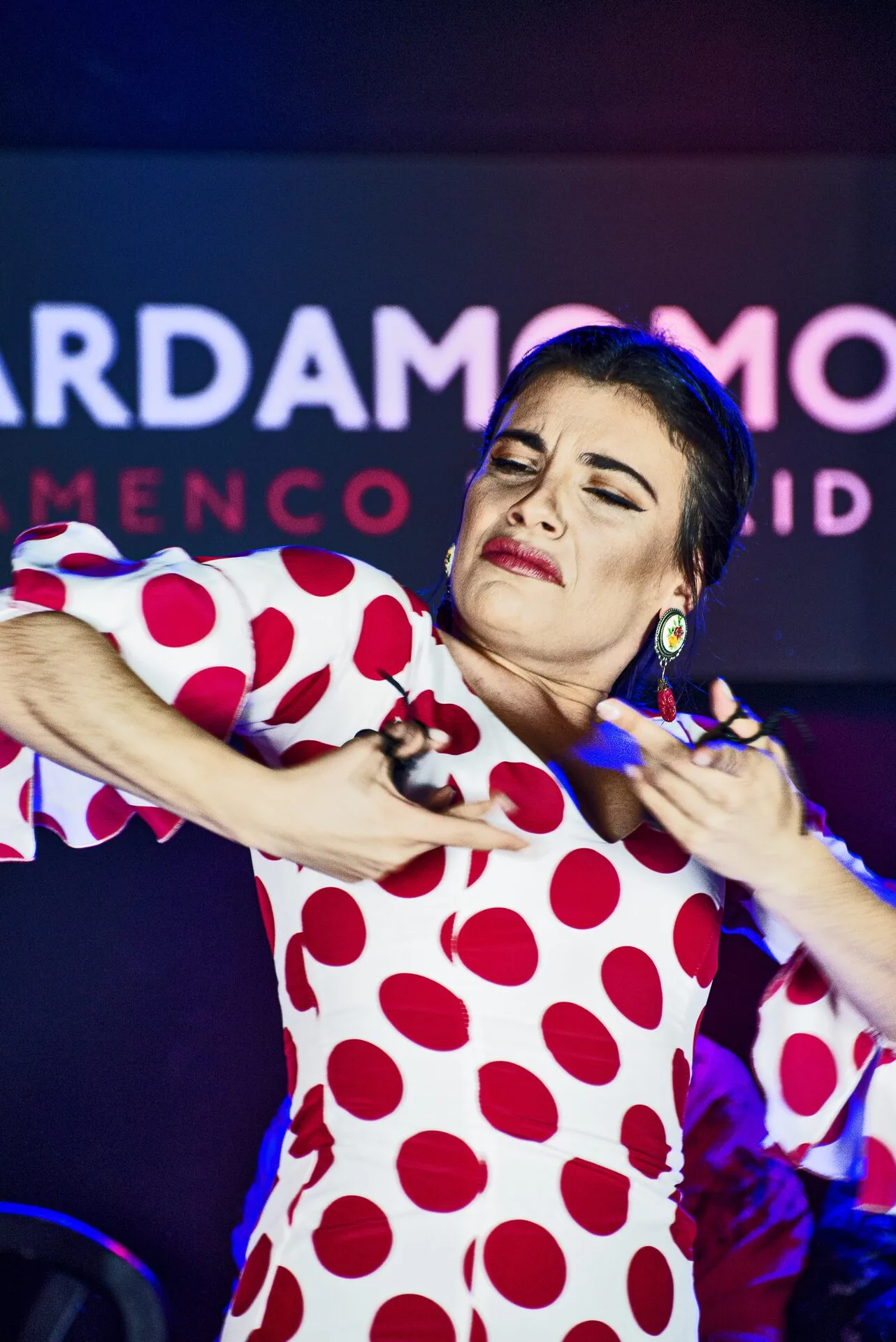
What is a teatro flamenco in Madrid?
A teatro flamenco is a theatre that programmes flamenco shows alongside other performing arts events. The format is that of a conventional theatre — a large stage, tiered seating, the audience in rows facing the performance at a distance.
This format works well for large-scale productions — flamenco shows with elaborate choreography, costumes and set design, designed to be seen from afar. The productions can be spectacular. But the relationship between the audience and the performers is fundamentally different from a tablao.
In a teatro, you are watching flamenco. You are a spectator. The performance happens on the other side of the footlights, separated from you by distance, lighting and the conventions of theatre.
What is a tablao flamenco in Madrid?
A tablao flamenco is something completely different. The word comes from tablado — the wooden platform on which flamenco has traditionally been performed in Andalusian bars and meeting houses for centuries. A tablao is an intimate venue — typically between 50 and 200 seats — where the stage is a raised wooden platform and the audience sits around it, close enough to see the sweat, hear the breath, feel the floor vibrate with the zapateado.
In a tablao, flamenco is not theatre in the conventional sense. It is a living art form performed in real time, without a script, responding to the energy of the room. The singer improvises. The guitarist follows. The dancer pushes the boundaries of the palo they are performing. The audience — if they feel it — responds. That exchange between artist and audience is what flamenco has always been about. It cannot happen from a distance.
In a teatro you watch flamenco. In a tablao you experience it. The difference is not aesthetic — it is fundamental to what flamenco actually is.
Teatro vs tablao — an honest comparison
Which is better for a visitor to Madrid?
That depends on what you are looking for. If you want a polished, large-scale production — flamenco as visual spectacle, with elaborate costumes and set design — a teatro flamenco can deliver that.
But if you want to understand what flamenco actually is — why it has survived for centuries, why it produces something called duende, why people who see it in an intimate tablao say it is one of the most powerful experiences of their lives — then the tablao is the only option.
The visitors who consistently say they wish they had gone to a tablao instead of a teatro are not people who disliked the teatro. They are people who went to the teatro first, then went to a tablao, and understood immediately the difference.
What to look for in a Madrid tablao
Not all tablaos are equal. Madrid has authentic tablaos with professional resident companies and tourist venues that use the word tablao without delivering the experience. The things that distinguish a genuine tablao from a tourist show:
- A resident company — not hired performers, but a group of artists who work together regularly and have developed a real musical relationship.
- Weekly rotation — the programme changes every week. If the show is always the same, it is not real flamenco.
- Intimacy — fewer than 200 seats. If the venue holds 500 people, it is not a tablao in the traditional sense.
- Location — the Barrio de las Letras, around Calle Echegaray and Plaza de Santa Ana, is Madrid's historic flamenco quarter. The concentration of authentic tablaos here is unmatched anywhere in the city.
The best tablaos in Madrid city centre
Two tablaos in the Barrio de las Letras meet all of these criteria — and have done so for decades.
Cardamomo Flamenco — Calle Echegaray 15
Founded in 1994. Recommended by The New York Times. Cultural Heritage of the City of Madrid. 100 seats. A professional resident company of 12 or more artists performing 60 minutes of pure flamenco nightly, with a programme that changes every week. From €34.
Tablao Flamenco 1911 — Plaza de Santa Ana 15
Founded in 1911 — the oldest tablao in the world. 170 tiered seats in an interior that recreates the Alhambra. Heritage-protected facade. The same commitment to authentic flamenco over a century later. From €40.
Frequently asked questions about teatro vs tablao flamenco
About the author
Miguel Blanco was born in Cadiz, the birthplace of flamenco, and fell in love with the art as a child. Today he lives in Madrid, where he has spent years following the city's tablao scene closely — which is how Flamenconearme.com came to be: the guide he wishes he'd had on day one. Read more