What is a tablao flamenco? The complete insider guide
If you're planning to see flamenco in Madrid, you've probably come across the word tablao. But what exactly is a tablao flamenco — and how is it different from a theatre show, a dinner show, or the flamenco you might stumble upon at a festival?
This guide answers every question a first-time visitor might have about tablaos — written by the team behind two of Madrid's most respected venues, with over 30 years of combined experience in authentic flamenco.
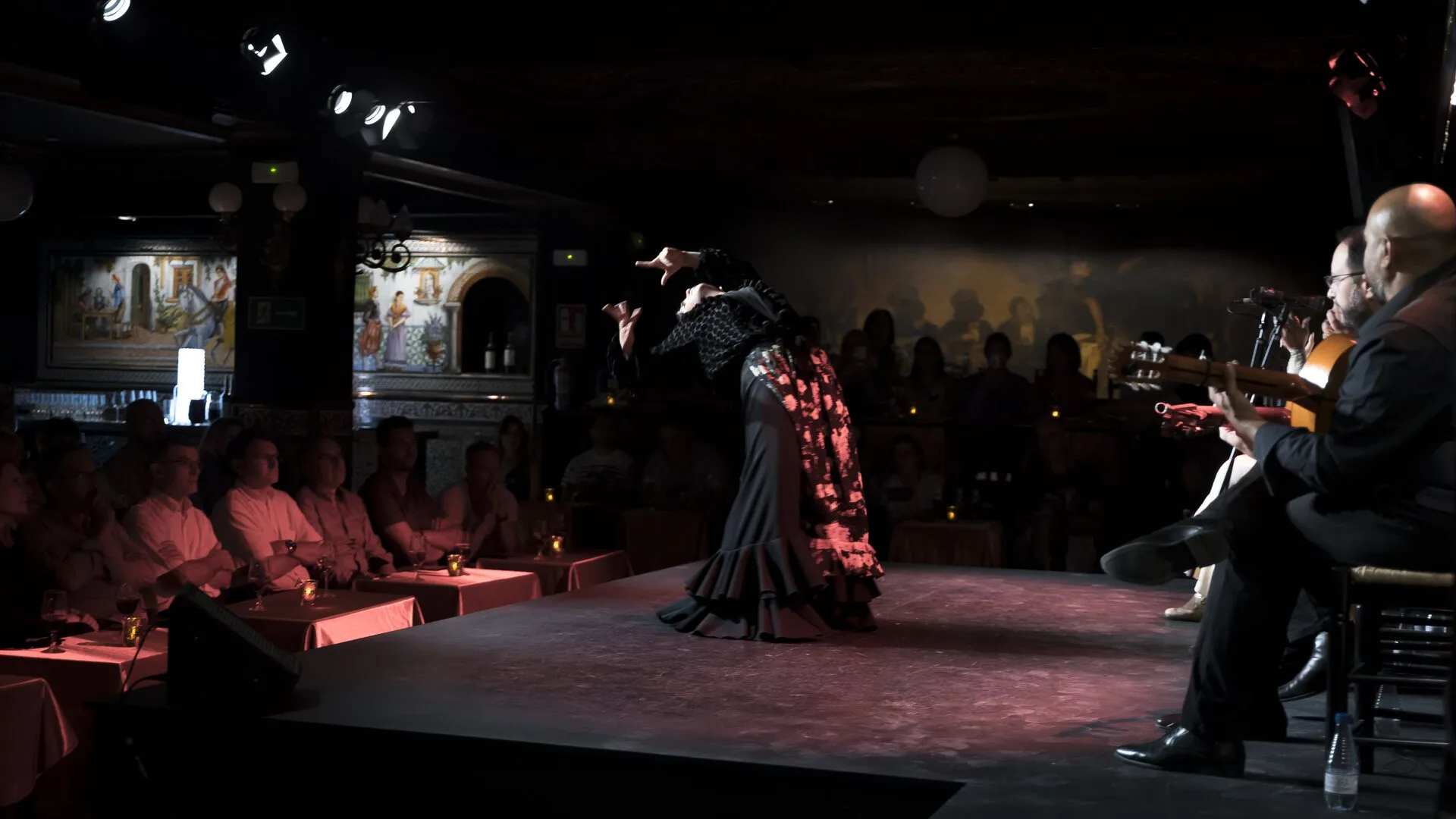
A tablao flamenco is an intimate venue dedicated exclusively to live flamenco — where professional artists perform baile (dance), cante (singing) and toque (guitar) up close, every night. It is the closest you can get to authentic flamenco outside of a private performance.
What does "tablao" mean?
The word tablao comes from the Spanish tablado, meaning a wooden platform or stage. Historically, flamenco was performed on raised wooden boards that amplified the sound of the dancers' feet — a technique central to the art form known as zapateado.
Over time, the word tablao became synonymous with the venues themselves: small, intimate spaces where flamenco artists perform live, night after night, for paying audiences.
The history of the tablao flamenco
The tablao as we know it today evolved from the cafés cantantes — singing cafes that flourished in Spain in the second half of the 19th century. These were the first commercial venues where flamenco artists were paid to perform regularly.
As the cafés cantantes declined in the early 20th century, a new format emerged: smaller, more intimate venues dedicated entirely to flamenco. The first tablaos appeared in Madrid and Seville in the 1950s and 1960s, and some of the most legendary — including Tablao Flamenco 1911, housed inside the historic Villa Rosa on Plaza de Santa Ana — trace their roots back even further, to the original entertainment venues of early 20th-century Madrid.
Today, the tablao remains the primary setting for live professional flamenco in Spain — and the best place in the world to experience the art form authentically.
What happens at a tablao flamenco?
A typical tablao show lasts between 60 and 90 minutes and features a company of professional artists — usually a combination of:
- Bailaor/a — the flamenco dancer, often the centrepiece of the performance
- Cantaor/a — the singer, whose voice carries the emotional weight of the show
- Guitarrista — the guitarist, providing both rhythm and melody
- Percusionista — the percussionist, often playing cajón (a box drum)
- Palmero/a — artists who provide rhythmic handclapping (palmas)
The show unfolds through a series of individual numbers, each in a different palo (flamenco style) — from the intense solemnity of a soleá to the explosive energy of a bulería. Each artist has their moment, and the interaction between performers — the spontaneous musical conversation that defines flamenco — is what makes a great tablao show something truly unforgettable.
"In a good tablao, you don't just watch flamenco — you feel it. The performers are close enough to see the sweat, the concentration, the emotion. There is nowhere to hide, and nowhere you'd want to be."
— The Flamenconearme.com teamTablao vs theatre: what's the difference?
Many visitors to Madrid see flamenco in a theatre setting — a large stage, hundreds of seats, and a carefully choreographed production. This is legitimate flamenco, and some theatre shows are excellent. But it is a fundamentally different experience from a tablao.
- Scale — A tablao seats between 50 and 200 people. A theatre can seat 1,000 or more. The intimacy of a tablao is its defining quality.
- Spontaneity — Theatre shows are fixed productions. Tablao shows have a structure, but within it, genuine improvisation and interaction between artists happens every night.
- Proximity — In a tablao, the artists perform at eye level, just metres away. You feel the vibration of the footwork, hear every breath of the singer.
- Authenticity — The best tablaos are staffed by resident companies of professional artists who live and breathe flamenco. It is their life's work, not a tourist show.
How to choose an authentic tablao in Madrid
Not all tablaos are equal. Madrid has a range of venues that call themselves tablaos, but the quality and authenticity varies significantly. Here is what to look for:
- Professional resident artists — A serious tablao employs a company of professional flamenco artists who perform regularly. Ask who is performing before you book.
- Small capacity — The more intimate, the better. If a venue seats more than 300 people, it is trending towards theatre territory.
- No dinner required — Many tourists associate flamenco with dinner shows. The best tablaos offer food and drink as an option, not a requirement. The show is the focus.
- Reputation — Look for tablaos with consistent reviews from serious flamenco fans, not just tourists. External recognition — from newspapers, cultural institutions, or bodies like the New York Times — is a strong signal.
- History — A tablao with deep roots in Madrid's flamenco scene is a safer bet than a venue that opened recently to capitalise on tourism.
The highest concentration of authentic tablaos in Madrid is in the Barrio de las Letras — the area around Calle Echegaray, Plaza de Santa Ana and Huertas. This is where flamenco has been performed continuously for over a century.
How much does a tablao flamenco cost?
Prices in Madrid range from around €22 to €52 per person depending on the venue and seating zone. Most quality tablaos charge between €34 and €44 for a standard show ticket. Premium zones — closer to the stage, better sightlines — cost more.
Some tablaos offer a dinner and show package at a higher price. Unless the food is a priority, the show-only ticket is usually better value and keeps the focus on the flamenco.
Do I need to book in advance?
Yes — especially between June and September, when Madrid is busy with tourists and the best shows sell out days in advance. Even outside high season, popular tablaos like those in the Barrio de las Letras can fill up 48 hours ahead.
Booking online is the safest approach. Look for venues that offer instant confirmation and free cancellation — that way you can plan ahead without risk.
Frequently asked questions about tablaos
About the author
Miguel Blanco was born in Cadiz, the birthplace of flamenco, and fell in love with the art as a child. Today he lives in Madrid, where he has spent years following the city's tablao scene closely — which is how Flamenconearme.com came to be: the guide he wishes he'd had on day one. Read more