The 5 palos of flamenco every first-time visitor should know
Flamenco is not one thing. It is a family of over 50 distinct musical forms — each with its own rhythm, emotional character, and history. These forms are called palos (literally "sticks" or "styles"), and understanding even a handful of them will transform your experience at a live show.
You do not need to become an expert. But knowing the difference between a soleá and a bulería — between gravity and joy, between introspection and explosion — will help you follow what is happening on stage and appreciate why the audience reacts the way it does.
A palo is a flamenco style defined by its compás (rhythmic cycle), its typical emotional character, and its historical and geographic origins. Each palo has its own rules, its own vocabulary, and its own relationship to duende.
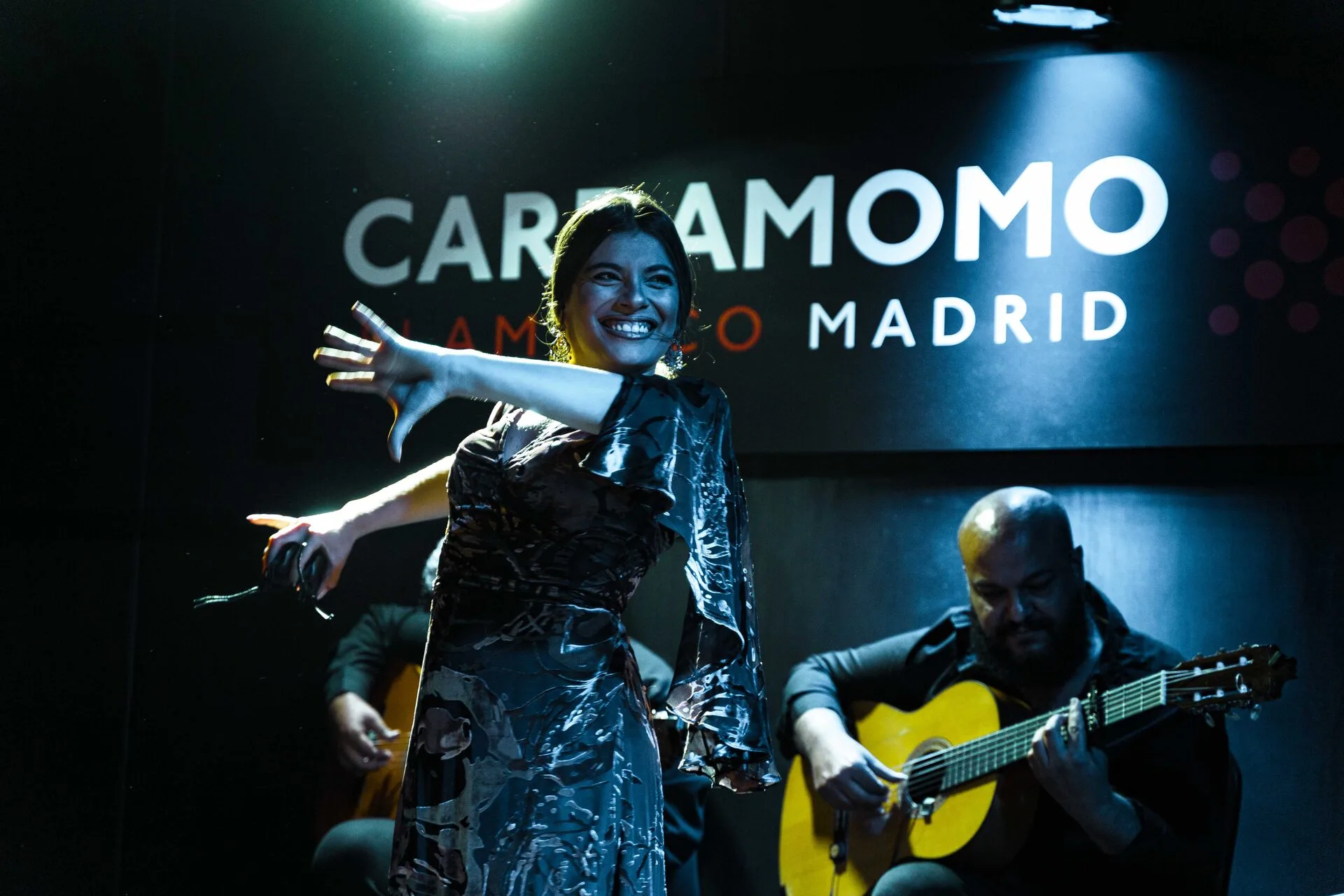
The 5 essential palos
There are over 50 palos in the flamenco canon. For a first-time visitor, five are essential — the ones you are most likely to encounter at a quality tablao, and the ones that will give you the clearest picture of what flamenco can be.
If there is one palo that sits at the heart of flamenco, it is the soleá. Slow, grave, and profoundly serious, the soleá is considered the mother form from which many other palos descend. Its name comes from soledad — solitude — and that is precisely what it expresses: a deep, dignified loneliness.
The soleá moves in a 12-beat cycle with a distinctive pattern of accented beats that gives it its weight and inevitability. Watching a great bailaora perform soleá is like watching someone wrestle with fate and choose to face it with beauty rather than despair.
If you feel the room go still during a show, and the dancer seems to be communicating with the floor itself — you are probably watching soleá.
If the soleá is a meditation, the bulería is a detonation. The fastest and most technically demanding of the major palos, the bulería uses the same 12-beat cycle as the soleá — but at a speed that makes it feel completely different. Explosive, joyful, and rhythmically intoxicating, the bulería is where flamenco artists go to show off and to celebrate.
Bulerías are often performed at the end of a show as a grand finale, with all the artists joining in — singers, dancers, guitarists, palmeros — in a collective expression of rhythmic joy. The interaction between performers is at its most spontaneous and visible here.
When the whole company is on stage and everyone is clapping and the room is electric — that is bulería.
The seguiriyas (also written siguiriyas) is widely considered the deepest and most emotionally demanding of all the palos. Its origins lie in the gypsy communities of Andalusia, and it carries within it centuries of grief, displacement, and resilience. The compás is complex and asymmetrical, and the singing style — raw, ornamental, and anguished — is among the most technically difficult in all of flamenco.
A great seguiriyas performance is not comfortable. It is not meant to be. It asks you to sit with something dark and difficult and find beauty there. When it works, it is perhaps the most powerful thing flamenco can produce.
If the singer sounds like they are crying or screaming — and you cannot look away — you are probably hearing seguiriyas.
As its name suggests, the alegrías (joys) is one of the most uplifting palos in flamenco. Originating in Cádiz on the Andalusian coast, it has a lighter, more festive character than the deep forms — though a great alegrías is never superficial. It is flamenco's way of saying that even joy, when fully inhabited, has depth.
The alegrías is a showcase for feminine grace in flamenco dance. The footwork is precise and percussive, the arm movements (braceo) elaborate and flowing, and the overall effect — when performed well — is something between a procession and a celebration.
If the dancer looks like she is walking on water and the room starts smiling — that is probably alegrías.
Not to be confused with Argentine tango, flamenco tangos is one of the most accessible and rhythmically direct of the palos. With a straightforward 4-beat compás, it is easier for new audiences to follow and feel — which is why it often appears early in a show, or as a way of drawing the audience in before the deeper forms.
Tangos comes in several regional varieties — the tangos de Jerez, the tangos de Triana, the tangos de Málaga — each with its own character. What they share is a directness of rhythm and a certain earthy playfulness that makes them irresistible even to first-time flamenco audiences.
If you find yourself instinctively tapping your foot and the rhythm seems to enter your body before your mind has processed it — that is tangos.
How to listen to a flamenco show
Knowing the palos is only half the battle. The other half is knowing what to listen and look for during a show. Here are a few things that will transform your experience:
- Listen to the compás — Try to feel the rhythmic cycle in each piece. Is it fast or slow? Does it feel regular or asymmetrical? The compás is the heartbeat of each palo.
- Watch the interaction — Flamenco is a conversation between performers. Watch how the guitarist responds to the singer, how the dancer responds to both. The real show is often in the spaces between.
- Pay attention to the palmas — The handclapping (palmas) is not decoration. It is rhythmic support and emotional encouragement. When the palmas intensify, something important is happening.
- Listen for the jaleo — The shouts of "¡Olé!", "¡Así!", "¡Agua!" from other performers are not audience noise — they are an integral part of flamenco, a tradition of call and response that connects the performance to its roots.
"You do not need to understand flamenco to feel it. But the more you know, the more you feel. Each piece of knowledge opens another door."
— The Flamenconearme.com teamFrequently asked questions about flamenco palos
About the author
Miguel Blanco was born in Cadiz, the birthplace of flamenco, and fell in love with the art as a child. Today he lives in Madrid, where he has spent years following the city's tablao scene closely — which is how Flamenconearme.com came to be: the guide he wishes he'd had on day one. Read more